
ABOUT ROOTED LOGIC GROUP
The Story Behind Rooted Logic Group
U.S. Air Force veteran · M.S. Computer Science, Cornell · Ronald E. McNair Scholar · Disabled Veterans’ Outreach Program Specialist, New York State
“Twenty years before driverless cars carried passengers across San Francisco, a recently discharged airman went to work on the trains that were learning to run without conductors.”
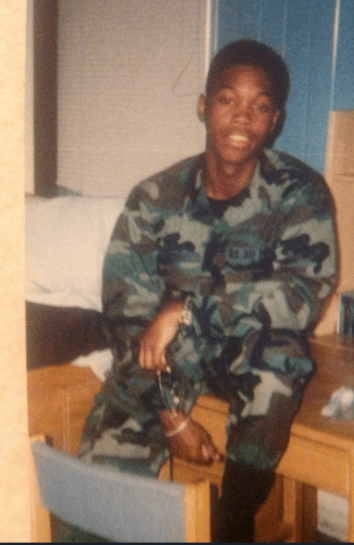
Standing in the Gap
That individual was Danny Adams. Fresh from the United States Air Force after serving in Operation Enduring Freedom and Operation Iraqi Freedom, he discovered that the field he had trained in didn’t exist in the civilian world. His first foothold in engineering arrived in the form of an automated monorail. On paper, the design said the train would stop precisely at its mark. His real education began on the days it didn’t.
It was a harsh lesson in a universal truth: systems fail when theory collides with the real world, and that collision would soon show him what was really at stake. Turning those fractures into functional, breathing operations from impossible designs became the invisible thread running through his entire career.
Learning What’s Really at Stake
Danny’s next stop was a hospital in the middle of a transition from paper charts to digital records. The whole conversion rested on one assumption: one patient, one file, one number. It looked like a technical project. It turned out to be a test of how fragile that assumption really was.
As he worked through the records, he found mislabeled entries, files that shared an identification number with another patient, and charts that held someone else’s information entirely. In a hospital, these are not clerical slips to be tidied up at the end of the day. Left uncaught, they become wrong treatments for the wrong people, and the consequences are a matter of life and death.
Data is never just data.
Guarding the line between record and reality became part of his job. But even as he protected patients, the system was failing his own family in ways no spreadsheet could show.
Keeping strangers safe was his job. Keeping his own family covered was another matter.

The Cost of Showing Up
When Danny’s third child was born, he was working in the very hospital where he had spent his days safeguarding patients’ lives. The hospital offered employee health coverage, but the numbers on the page told a blunt truth: he could not afford to use that coverage for his own family.
Danny came from people who worked with their hands and served their country. Both of his grandparents served in Vietnam. His mother cleaned houses and worked in a bowling alley to keep the family afloat. In that household, no one talked about balance or self-care; you kept going, took the shifts you could get, and stayed grateful for the paycheck.
But staring at the cost of accessing care for his newborn, he began to ask a different question: What was the paycheck costing in return? What did it mean to devote his energy to a system that relied on his vigilance at work while leaving his own family exposed at home?
Climbing Out, One Rooted Step at a Time
Those questions led Danny back to school. At community college, he discovered that his chosen degree had no straightforward four-year counterpart. There was no mapped-out path, no obvious next credential to chase. He built the path anyway.
This is where the name Rooted Logic Group begins: in the work of climbing out of a precarious situation one rooted, logical step at a time. No shortcuts, no guarantees — just the discipline of asking what is actually happening, what matters most, and what the next solid foothold can be.
While supporting a family of five, Danny held three jobs at once and navigated a government shutdown while living on roughly $12,000 a year. He graduated magna cum laude as a Ronald E. McNair Scholar and earned a place at Cornell University, supported by a Dean’s Excellence Fellowship.
These milestones mattered. But for Danny, they were less about prestige and more about proof: proof that it was possible to move from survival mode to something sturdier without abandoning the people who were counting on him.

Getting in was one achievement. Belonging was another.
Building the Community He Needed
At Cornell, Danny was often the only person in the room who looked like him. The isolation was quiet but constant. Instead of treating that isolation as a private burden, he turned it into an opening to build the community he was missing.
Tea & Treats began as an informal hour set aside for graduate students: a small table, a pot of tea, something to eat, and a simple invitation to show up for one another. What started as a modest gathering grew into a steady presence that ran for roughly three years and earned recognition across the wider community and within the department.
In a place where research timelines and publication pressures easily eclipsed human needs, Tea & Treats was a quiet refusal to let people become invisible. It was a reminder that even in elite institutions, care and connection are not extras; they are essentials.
But a small table and a pot of tea could only hold so much weight.


A degree earned while rebuilding.
When the System Itself Becomes Unsafe
Then came 2020. The world fractured, and graduate school became a theater of compounding crises. For Danny, an ambitious researcher working alongside emergency first responders confronting wildfires and crumbling infrastructure, the demands of research increasingly intersected with urgent human needs. Research grants tied to international collaborations faced uncertainty amid policy shifts concerning funding from China [1]. Meanwhile, first responders continued to confront the challenges of protecting communities amid environmental hazards and vulnerable infrastructure [2]. Across the country, racial violence and police brutality brought renewed attention to the structural inequities shaping the lives and mental health of Black Americans [3]. For Danny, these were not isolated developments. They formed the backdrop against which his academic work, personal security, and professional commitments took on new significance.
The national reckoning was deeply personal. The murders of Ahmaud Arbery, Breonna Taylor, and George Floyd, along with the police shooting of Jacob Blake [3], underscored how questions of safety, institutional accountability, and racial inequity extended into everyday life. As a person of color navigating graduate school, Danny could not separate these realities from his academic experience. Yet his commitment to developing practical solutions for emergency first responders endured. He continued applying his technical expertise to problems with tangible consequences, even as the demands of his research and the uncertainty surrounding his circumstances became increasingly difficult to reconcile.

Eventually, sustaining that commitment at the expense of his own well-being became untenable. Danny recognized that perseverance without regard for its consequences was no longer serving him or the work to which he had devoted himself. In 2022, he made the difficult but pragmatic decision to take a leave of absence, choosing to confront the limits of an unsustainable path rather than continue along it.
Perseverance without regard for its cost.
MLA Citations
- Lee, Jenny J., and Xiaojie Li. Racial Profiling Among Scientists of Chinese Descent and Consequences for the U.S. Scientific Community. Committee of 100, 2021.
- Congressional Research Service. Wildfire Statistics. Report no. IF10244, Library of Congress, 4 Jan. 2021, https://crsreports.congress.gov/.
- Eichstaedt, Johannes C et al. “The emotional and mental health impact of the murder of George Floyd on the US population.” Proceedings of the National Academy of Sciences of the United States of America vol. 118,39 (2021): e2109139118. doi:10.1073/pnas.2109139118
Rebuilding, With Honesty
Taking a leave of absence was not the tidy, linear step anyone plans for. It did not feel like a victory, and it did not come with a map. It was a clear-eyed acknowledgment that sometimes the most responsible, leadership-driven move is to pause, rather than keep giving everything to a system that will accept your endless sacrifice without ever repairing itself.
Rather than waiting for the institution to change, Danny took his talents into the wild. He joined a fast-growing startup, where theory had to survive immediate execution, and where he designed and implemented core components of the product. That work contributed to the company’s later acquisition and confirmed something he had already suspected: the skills he had been building were needed far beyond a single institution. The detour did not pull him away from his academic goals. It sharpened them.
When he returned to campus, he finished what he had started, earning his M.S. in Computer Science from Cornell University. He came back with hard-earned operational grit and a deeper understanding of what it takes to build under extreme constraint.
But the most important rebuilding did not happen in a codebase or a lecture hall. Alongside the professional work, Danny committed to a different kind of effort: the slow, unglamorous work of looking honestly at himself. No deadline rewards that kind of examination and no system tracks it, but it determines whether healing is possible. It meant sitting with the exhaustion, the anger, and the self-doubt that come from years of surviving environments not built for you to thrive in.
Rebuilding with honesty means admitting when a place is failing you, trusting yourself enough to step back, and betting on your own work outside the institution. The hardest part is holding up a mirror to your own wounds so that healing can actually begin.
Rooted Logic Group is built from that season of rebuilding.
Service, Full Circle

Today, Danny serves New York State as a Disabled Veterans’ Outreach Program Specialist. In that role, he works with veterans facing significant barriers to employment, helping them retrain, find work, and reconnect with the benefits they have already earned through their service.
This work ties together every chapter that came before it. His grandparents’ service in Vietnam. His own service in uniform. The meticulous care he brought to hospital data integrity. The small circle of Tea & Treats that made a vast institution feel a little more human.
Across each setting, the pattern is the same: Danny steps into the space between what a system promises and what it actually delivers, and he stands with the people most affected by that gap.
He has always shown up for people the system forgot.
A Perspective Shaped by Experience
- United States Air Force veteran, with campaign badges for Operation Enduring Freedom (OEF) and Operation Iraqi Freedom (OIF).
- M.S. Computer Science, Cornell University
- Ronald E. McNair Scholar; graduated magna cum laude
- School of Engineering Outstanding Senior Award for Computer Science at the University of New Mexico
- Bachelor’s in Computer Science, Minor in Mathematics, magna cum laude.
- Built core product at a startup later acquired
- NY State Disabled Veterans’ Outreach Specialist
- Created Tea & Treats (about three years)
- Former Vice President of the University of New Mexico chapter of the National Society of Black Engineers (NSBE).
Danny speaks on this work. Invite him to your group
The Work
Rooted Logic Group exists for what comes after. Most current writing on burnout focuses on causes and quick fixes, and skips the hardest part: identifying what the damage actually is and summoning the courage to investigate the way back.
Rooted Logic Group’s talks and resources are designed to walk through that investigation with care. They begin by naming what has been lost or eroded, then rebuild with balance in mind and with short- and long-term goals that belong to the individual rather than the institution.
Danny Adams engages graduate students, professionals, and teams in conversations about burnout, the often-overlooked toll of professional ambition, and the choices that support recovery, agency, and long-term well-being.. Rooted Logic Group is built to grow into a collaboration of voices committed to the same mission.
What He Brings Into Focus
- Burnout, beyond the symptoms
- The human cost of toxic workplace culture
- Recovery, agency, and well-being in imperfect systems
“He began his career helping systems run without people. He now helps people recover from the systems that quietly relied on them.”
Support the mission
Donations fund the research tools, secure web infrastructure, and content creation equipment needed to advance burnout prevention, mental wellness, and sustainable careers in technology.
Start here
If you recognize yourself or your community in this story, you don’t have to navigate the next steps alone. Begin with a single, grounded action.
Danny Adams, M.S. Computer Science, Cornell University · Founder, Rooted Logic Group